Why Humans Gather
Gathering is so much of a human behavior that has always been collective; there is rarely any other form of life throughout human history where a gathering was not possible. From the earliest community eating to the rituals of seasonal festivals to the recognition of family milestones, a gathering usually serves a purpose that surpasses any immediate practical concern.

Recognition and Witnessing
Recognition through gathering is deeply ingrained with the human experience. Recognition of some sort is involved in all social interaction. We place our cultures within all that we face together as witnesses of change, accomplishment, loss or transition. An event becomes real and powerful; acknowledging it brings it to its fullest.
Where the mind flinches before, the heart sings after. Yes, it does matter how one is perceived. A moment is more real if it is shared with another. Participating in an event with others' recognition happens without justifying specific importance or explanation. Which means the only proof of an event's significance is, quite simply, its shared recognition.
Belonging and Continuity
Gatherings reinforce a sense of belonging. They remind participants that they are part of something ongoing, whether a family, a community, or a shared history that stretches beyond the present moment. This continuity helps people locate themselves within a broader narrative rather than experiencing life as a series of isolated events.
Even casual or spontaneous gatherings contribute to this feeling. Repeated encounters create familiarity, and familiarity builds trust and emotional safety over time. Through gathering, people reaffirm their place among others.
Pause in the Flow of Time
Everyday life tends to move forward without clear markers. Responsibilities blend together, and weeks can pass without distinction. Gatherings interrupt that flow. They create pauses that allow people to reflect, celebrate, remember, or simply be present together.
These pauses help distinguish one phase from another. Without them, time can feel blurred and unacknowledged. Gathering gives time texture and meaning.
Traditions as Shared Language
Traditions offer a framework for gathering. They provide recognizable forms that reduce uncertainty and create a shared language of meaning. While traditions differ widely across cultures, regions, and families, their function remains similar: they make gatherings intelligible and emotionally accessible.
Traditions do not need to be followed rigidly to be effective. Even loosely observed, they help participants understand what kind of moment they are entering and how to relate to it. They offer guidance without requiring constant explanation.
Structure Without Explanation
A key strength of tradition is that it communicates without instruction. Lighting candles, sharing a meal, offering a toast, or sitting together in a certain way carries meaning without needing to be explained aloud.
This shared understanding allows people to participate comfortably, even if they are unfamiliar with every detail. Tradition lowers the barrier to emotional engagement and reduces the anxiety of not knowing how to behave.
Cultural Memory and Repetition
Traditions persist because they are repeated. Each repetition reinforces memory, not just of the action itself, but of previous moments associated with it. Over time, layers of experience accumulate around familiar gestures and practices.
This accumulation gives traditions emotional depth. A simple action can carry decades of memory when repeated across generations. What appears ordinary on the surface often holds significant emotional resonance beneath.
Tradition as Adaptable Form
Despite appearances, traditions are rarely static. They adapt as contexts change, absorbing new meanings while retaining recognizable structure. Details shift, participants change, and interpretations evolve.
This adaptability explains why traditions continue to feel relevant. They evolve alongside the people who practice them, reflecting lived reality rather than fixed rules.
Evolving Rituals in Modern Life
Rituals are often associated with formality or religion, but in practice they exist wherever meaning is intentionally marked. Modern life has not eliminated ritual; it has diversified it. New rituals emerge as old ones shift, soften, or fade.
These evolving rituals respond to contemporary realities, including changing family structures, mobility, and communication patterns. They offer continuity without requiring strict adherence to inherited forms, making space for personal relevance.
From Formal to Personal Rituals
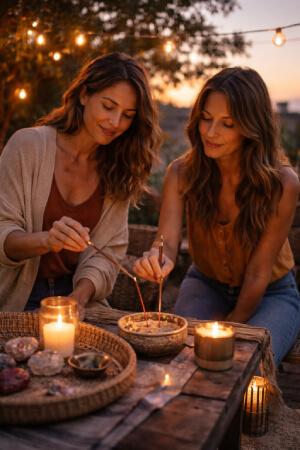
Many modern rituals are informal and deeply personal. A yearly gathering of friends, a shared walk on an anniversary, or a quiet meal on a meaningful date can function as ritual without ceremony or public acknowledgment.
What defines ritual here is intention, not scale. The repeated act gains meaning through consistency rather than visibility. Over time, these personal rituals become emotional anchors.
Hybrid and Blended Practices
As cultures intersect, rituals blend. Elements from different traditions are combined, creating practices that reflect layered identities and experiences. These blends often emerge organically rather than through deliberate design.
Hybrid rituals can feel especially resonant because they acknowledge complexity rather than enforcing uniformity. They allow people to honor multiple influences without needing to choose between them.
Rituals Without Audience
Not all rituals require witnesses. Some are practiced privately or within small groups, serving as personal anchors rather than social signals. These rituals support inner continuity and reflection.
Though quiet, they still shape how people approach gatherings when shared later. They influence tone, intention, and emotional readiness.
Personal Customs and Emotional Weight
Beyond inherited traditions, personal customs play a powerful role in giving gatherings meaning. These customs develop organically, shaped by relationships, experiences, and shared history rather than formal rules.
Personal customs often feel more emotionally charged because they are specific. They belong to particular people and moments, reflecting lived experience rather than abstract tradition.

How Customs Take Shape
Most personal customs begin unintentionally. A repeated choice becomes a habit, and over time that habit gains significance. What starts as convenience can turn into meaning through repetition and association.
Once noticed, these customs often become protected. Changing them can feel disruptive, which signals their emotional importance even if their origin was accidental.
Memory Embedded in Practice
Personal customs act as containers for memory. They carry associations with past conversations, emotions, and shared moments. Repeating the custom recalls these layers without conscious effort.
This embedded memory gives gatherings depth that cannot be replicated through planning or decoration alone. Meaning is carried through doing, not explaining.
Passing Customs Forward
Some personal customs remain private, while others are shared with new participants or passed to younger generations. This transmission transforms individual habits into shared rituals.
When customs are passed on, they become living traditions shaped by both continuity and change. They remain meaningful precisely because they adapt.
Gatherings Beyond Celebration
Gatherings do not always radiate a jubilant atmosphere; they are events. Substantial events like support, farewell, and many more things which gather people around but emphasize emotionality other than and more than joyful celebration.
It is these gatherings that manifest a broader reality of coming together merely to share one's experience then the feeling of happiness. They communicate to the participants that purpose transcends happy events alone.
Supportive Gatherings
Gatherings during difficult times offer presence rather than resolution. They provide a shared space where emotion can exist without explanation, fixing, or advice.
This form of gathering reinforces trust and mutual care. It strengthens bonds through shared vulnerability rather than shared celebration.
Commemorative Moments
Commemoration allows people to remember collectively. Whether tied to loss, history, or absence, these gatherings acknowledge that memory is both personal and shared.
Ritualized remembrance helps integrate past experiences into ongoing life rather than isolating them. It gives memory a place to exist.
Transitional Gatherings
Some gatherings exist specifically to mark transition. They acknowledge endings as much as beginnings, helping participants process change together.
These moments offer emotional closure and continuity at the same time, supporting movement forward without erasure.
Meaning Over Appearance
Modern culture often emphasizes how gatherings look rather than what they do emotionally. While visual elements can enhance atmosphere, they are not the source of meaning. Focusing on meaning shifts attention from display to experience. It asks how people feel during and after the gathering, rather than how it appears from the outside.
Atmosphere shapes emotional response. Lighting, sound, and pacing influence how people engage with one another without drawing attention to themselves. When atmosphere supports comfort and presence, meaning emerges more naturally and interaction feels less forced.
Meaning is not proportional to size. Small gatherings often allow deeper connection because they reduce social distance and encourage conversation. Intimacy supports vulnerability, which is often where emotional significance resides.
Shared Elements That Give Gatherings Weight
Across cultures and contexts, certain elements consistently contribute to meaningful gatherings. These elements are not rules, but patterns that appear wherever people come together with intention.
- They operate quietly, shaping experience without demanding attention.
- Repetition of familiar actions that signal continuity
- Shared food or drink that anchors people in the same moment
- Moments of collective attention, such as silence or storytelling
- Clear beginnings and endings that frame the experience
These elements support emotional coherence. They help gatherings feel complete rather than fragmented.
Familiarity and Safety
Familiar actions reduce uncertainty. When people know what to expect, they relax and engage more openly.
This sense of safety supports connection, reflection, and openness.
Embodied Experience
Eating, sitting, walking, or listening together creates shared physical experience. This embodiment reinforces emotional connection.
Meaning is often felt as much as it is understood.
Clear Transitions
Beginnings and endings matter. They help participants enter and leave the gathering consciously rather than drifting in and out.
Clear transitions give the experience shape and memory.
Gatherings as Living Practices
Gatherings are living practices and are not fixed forms, meaning that when people, situations, and values change, so do the practices. When treated as tools in this way, practices can retain meaning even in their alterations as a means of fostering elasticity.
In understanding the above truth, we are relieved of the notorious pressure to be "right." Being flexible is interpreted as inquiry. A change in form can still be rooted in the same reasonings.
In reflecting upon the diversity of gatherings one finds what it is about gatherings that really matters, or not. The lessons or takeaways move humans forward by helping them define how they can come together. The quiet lessons would come to meet the future.
Why Gathering Endures
Gatherings are important due to a basic human need, that is to share experiences and take part in shared meanings. Various traditions, rituals, and individual customs add emotional import to many otherwise unnoticed particular moments. Gatherings that take intention as the main focus, rather than looks, ensure continuity between eras while flowing with change. In doing so, gatherings help one remember, while ushering participants into realization, that meaning cannot be made; it is instead fertilized with presence, repetition, and shared focus.